
Why You Must Never Ignore a Buzzing Breaker Box
The main breaker panel mounted in the basement of a Gloucester property is the silent, heavily burdened heartbeat of the entire residential infrastructure. It is strictly engineered to quietly distribute massive amounts of high-voltage energy without ever drawing attention to itself. If a homeowner walks past this metal enclosure and begins to notice a distinct buzzing sound, a faint physical vibration against the wall, or a suspiciously warm sensation when touching the metal door, they are not facing a minor mechanical quirk. They are standing inches away from a highly active, incredibly dangerous thermal emergency. A healthy breaker box makes absolutely no noise whatsoever; any audible sound is a highly critical warning that the internal components are actively failing and threatening to ignite the surrounding structure.
To grasp the severity of a buzzing panel, you must understand exactly what causes that specific sound. The buzzing is almost always the physical manifestation of electrical arcing. Arcing occurs when high-voltage electricity is forced to jump across a tiny physical gap between two conductive metals that are no longer tightly connected. As the electricity leaps across the air, it produces a distinct humming or crackling noise. This continuous leap of energy generates terrifyingly intense heat, easily reaching temperatures capable of instantly melting the heavy plastic breaker casings and completely liquefying the surrounding copper wires. If the arcing is allowed to continue, the panel will rapidly consume itself in a highly aggressive, sustained electrical fire.
One of the most common causes of this highly dangerous arcing is a loose main lug connection. The incredibly thick wires bringing the total power supply from the Gloucester utility street pole attach to the internal bus bars using massive metal lug nuts. As the seasons change, these thick metal components naturally expand and contract with the temperature. Over decades of constant use, this microscopic daily movement can slowly cause the heavy lug nuts to back themselves out, creating a tiny, highly resistant gap. Because these main lines carry the full, unmitigated amperage of the entire house, even a microscopic gap will create massive friction and a deeply audible, heavy vibration.
Another frequent source of panel vibration is a severely degraded or failing circuit breaker. Breakers contain internal bimetallic strips specifically designed to bend and physically trip the switch when the circuit becomes dangerously overloaded. If this internal mechanism becomes weak, heavily corroded, or coated in dust, it will constantly struggle to maintain a firm connection with the bus bar. The breaker will physically vibrate rapidly as it desperately attempts to carry the heavy electrical load without tripping. This intense, continuous vibration completely destroys the connection point, severely scorching the metal bus bar and permanently ruining the entire enclosure. Securing immediate, highly professional Electrical Repairs in NJ is the absolute only safe response to this developing disaster.
Homeowners must absolutely never attempt to open a buzzing panel or try to tighten the loose connections themselves. The main lugs inside that box carry fatal amperage that completely bypasses all household safety mechanisms; a single slip of a screwdriver is instantly lethal. A highly trained, fully licensed technician wearing heavy protective gear will safely shut down the primary street feed before carefully diagnosing the fault. If the arcing has severely scorched the internal bus bars or melted the plastic mounting brackets, the technician will strictly condemn the panel, completely removing the ruined enclosure and installing a brand-new, totally secure system to restore the fundamental safety of the home.
Ignoring the highly audible warning signs of a failing electrical panel is a deeply reckless gamble that almost always ends in catastrophic structural loss. The buzzing sound is not going to magically fix itself; the physical gap will only widen, and the resulting heat will rapidly increase. By treating any noise or vibration from the breaker box as an immediate, severe emergency, you completely prevent a minor mechanical fault from escalating into a massive residential fire. Demanding rapid professional intervention guarantees that your underlying power grid is safely secured and your family remains totally protected.
A healthy main breaker panel operates in total silence; any buzzing, crackling, or physical vibration strongly indicates that highly dangerous electrical arcing is actively occurring inside the enclosure. This arcing generates intense, rapid heat capable of instantly melting the internal plastic components and igniting a severe structural fire. Securing immediate, professional diagnostic testing and repair completely neutralises this extreme hazard and prevents a catastrophic loss of property.
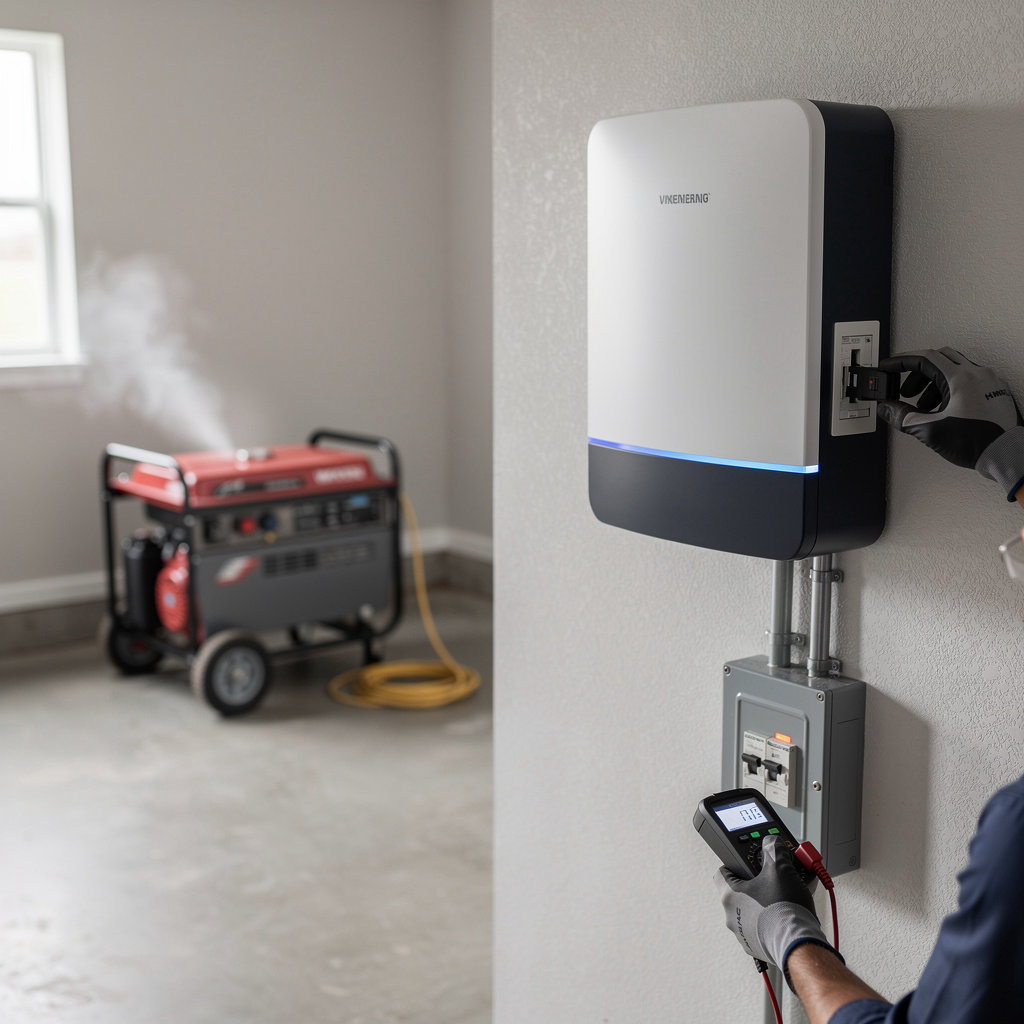
How Battery Backup Systems Work: The Technical Foundation
A modern battery backup system is far more complex than a simple battery and inverter sitting in your basement. Three critical technical components work together to safely store power, convert it, and deliver it to your home during an outage. Understanding these components helps you grasp why professional installation is non-negotiable—and why amateur attempts inevitably fail.
The Inverter: Your DC-to-AC Translator
Lithium-ion batteries store energy as direct current (DC)—the same type of power your car battery produces. But your home runs on alternating current (AC), the type delivered by the utility grid. The inverter is the intelligent translator between these two worlds. It continuously converts stored DC power into clean, stable AC power at exactly 120/240 volts with precise frequency synchronization (60 Hz in North America).
This conversion is not simple mathematics. The inverter contains sophisticated electronics that monitor voltage fluctuations, respond to sudden load changes (like when you turn on a microwave), and prevent electrical noise from damaging sensitive devices like computers or medical equipment. It's essentially a tiny power plant running inside a metal cabinet.
Here's the critical detail: inverters generate significant heat during this conversion process. A typical 10 kW inverter can generate as much thermal energy as a space heater running continuously. That heat must be managed—either through passive cooling (large aluminum fins and airflow) or active cooling (fans and ventilation). Poor placement or inadequate ventilation causes the inverter to thermal-throttle (reduce output) or shut down entirely. This is why professional installers carefully calculate heat dissipation and position the inverter in a location with proper airflow, away from walls or enclosed spaces.
Amateur installers often cram the inverter into a tight closet or garage corner, assuming "out of sight, out of mind" is acceptable. Within months, the inverter overheats, its internal components degrade, and the entire system fails—or worse, poses a fire risk.
The Automatic Transfer Switch: Your Safety Barrier
The automatic transfer switch (ATS) is the most critical safety component in any battery backup system. It is a sophisticated electrical relay that sits between three power sources: the utility grid, your battery backup system, and your home's electrical panel. Its job is to ensure that only one power source ever feeds your home at any given moment.
Think of it as a safety barrier that prevents backfeed—a scenario where your battery system could accidentally send power back into the utility lines while a lineman is working on the grid. Backfeed is instantly lethal to utility workers. It's also a criminal liability if someone is electrocuted because your system was installed incorrectly. The ATS prevents this by automatically disconnecting your battery system from the grid during an outage, and switching back to grid power when power is restored.
The ATS also manages the transition seamlessly. When the grid fails, the ATS detects the loss of voltage within milliseconds and automatically switches your home to battery power—so fast that most devices don't even notice the outage. When grid power returns, the ATS waits for a programmable delay (typically 5 minutes) to ensure the grid is stable, then automatically switches back and begins recharging the batteries.
The ATS must be installed by a licensed electrician and integrated into your electrical panel in compliance with local electrical codes. Improper installation—such as failing to properly ground the system or omitting the backfeed protection—creates a lethal hazard. This is not a DIY component, and it is not something to compromise on.
The Emergency Sub-Panel: Strategic Circuit Selection
A battery backup system does not power your entire home indefinitely. If you tried to run your air conditioner, electric water heater, and range simultaneously off a battery during an outage, your stored power would deplete in minutes. Instead, a dedicated emergency sub-panel separates your most essential circuits from heavy-draw appliances that consume too much power.
Essential circuits typically include: refrigerator, lighting, internet router, phone chargers, medical devices, and heating (if applicable). Non-essential circuits that must be locked out include: air conditioning, electric range, water heater, electric dryer, and pool pumps. The sub-panel contains its own breakers that physically disconnect these heavy loads from the battery system, ensuring that stored power lasts for days rather than hours.
Load calculation is the critical step that amateur installers skip. A professional electrician measures the actual power draw of each essential circuit (in watts or amps), then adds them together to determine how long your batteries will last during an outage. If your essential load is 3 kW and your battery stores 30 kWh, you have roughly 10 hours of power—assuming you don't exceed that 3 kW threshold.
Without this calculation, homeowners often overload the system by running circuits they assumed were "essential," only to discover the batteries die hours earlier than expected. Professional installation includes a detailed load assessment and written documentation of which circuits are protected and for how long.
Why Amateur Installation Fails
Battery backup systems are not like solar panels or simple electrical upgrades. They involve high-voltage DC systems, complex power electronics, automatic safety switches, and code-compliance requirements that demand licensed professional expertise. Here's what goes wrong when homeowners or unlicensed installers attempt this work:
- • Inverter Overheating: Poor placement and inadequate ventilation cause thermal failure within months.
- • Backfeed Hazards: Improper transfer switch installation creates lethal risk to utility workers and legal liability to the homeowner.
- • Code Violations: Unlicensed installation fails municipal inspection, voids insurance coverage, and creates safety hazards.
- • Load Miscalculation: Overloading the battery system causes premature depletion and system failure during actual outages.
- • Grounding & Bonding Errors: Improper electrical bonding creates shock hazards and equipment damage.
A licensed electrician navigates these complexities with precision, ensures code compliance, performs load calculations, manages heat dissipation, installs the transfer switch correctly, and documents the entire system for future service and insurance purposes. This is not a cost you can cut—it's an investment in safety, legality, and longevity.
Battery backup systems represent the modern standard for home power resilience. The inverter, transfer switch, and emergency sub-panel work together as an integrated system to safely store, convert, and deliver power during grid failures. Each component demands professional expertise and precise installation. Understanding these technical foundations reinforces why cutting corners is not an option—and why working with a licensed, experienced electrician is the only safe path forward.
Safety, Codes, and Professional Installation
Battery backup systems are heavily regulated by municipal fire codes and electrical standards. Proper installation requires careful attention to weight-bearing structural requirements, fire safety distances, and permitting processes. This is not a DIY project—professional installation is the only safe path to code compliance and peace of mind.
Municipal Fire Code Requirements
Battery backup systems must comply with local fire codes that govern placement, ventilation, and thermal safety. Battery enclosures cannot be installed in egress routes (hallways or pathways used for emergency exit) or within specified distances from doors, windows, or electrical panels. These separation distances exist to prevent thermal runaway scenarios from blocking escape routes or damaging adjacent electrical infrastructure. Your local Gloucester County or New Jersey municipal authority maintains specific code documents that govern battery placement in residential properties. A licensed electrician familiar with your jurisdiction's requirements ensures the system meets all fire marshal standards before installation begins.
Structural Weight-Bearing Requirements
Modern lithium-ion battery systems weigh 100 kilograms or more—equivalent to a large safe or piece of heavy machinery. This weight cannot simply be mounted to drywall or light framing. Professional installation requires structural assessment of the wall or floor where the battery will sit, identification of load-bearing studs or floor joists, and installation of heavy-duty mounting brackets that transfer the full weight directly into the home's structural skeleton. Improper weight distribution can lead to wall failure, floor sagging, or complete system collapse. Sperry Electric's installation process includes a structural evaluation before any mounting work begins, ensuring the battery enclosure is secured to permanent structural elements rated for the load.
Thermal Runaway Risk & Safety Separation
While lithium-ion thermal runaway is rare in modern systems with built-in safety mechanisms, fire codes require strict safety separation distances from combustible materials, insulation, and occupied spaces. Battery enclosures must be installed in areas with adequate ventilation to dissipate heat during normal operation and to allow any thermal event to vent safely away from the structure. Placement in basements, garages, or utility rooms is typical because these spaces offer better thermal isolation than living areas. Professional installers understand these separation requirements and position the battery in a location that maximizes safety while maintaining accessibility for maintenance and monitoring.
Permitting and Inspection
Most municipalities require electrical permits for battery backup system installation. The permit process involves submitting detailed plans showing the system layout, load calculations, circuit diagrams, and the location of the battery enclosure. A municipal electrical inspector then visits the site after installation to verify that the work meets code. This inspection protects you by ensuring the system was installed correctly and is safe to operate. Skipping the permit process to save time or money creates liability—if a problem occurs, your homeowner's insurance may not cover damage if the work was unpermitted. Sperry Electric handles all permitting requirements and coordinates with local authorities to ensure inspections are scheduled and completed.
Why Professional Installation Is Non-Negotiable
Battery backup installation involves high-voltage DC circuits, complex inverter configuration, automatic transfer switch programming, and structural engineering—any of which can cause system failure, electrical hazards, or fire if done incorrectly. A professional electrician brings code knowledge, structural assessment skills, manufacturer certification, and liability insurance. They navigate municipal permitting, coordinate inspections, and guarantee the system will perform safely when you need it most. Sperry Electric's meticulous approach ensures every installation meets or exceeds code requirements and provides you with the confidence that your home's power resilience is built on a foundation of safety and compliance.
Bottom line: Battery backup systems are powerful, complex, and heavily regulated. Municipal fire codes, structural requirements, and permitting processes exist to protect you and your home. Professional installation by a licensed, insured electrician is not an option—it is the only safe and legal way to integrate a battery backup system into your Gloucester County home.
Schedule Your Battery Backup Consultation
Let Sperry Electric evaluate your home's power needs and design a custom battery backup system that keeps your family protected.
Or visit Sperry Electric's website to learn more about their services.